Cultural Heritage Preservation
Cultural Heritage Preservation (CHP) specializes in the digitization, restoration, and reproduction of fine art, historical documents, and culturally significant materials. Using institutional-grade photographic equipment and specialized imaging software, CHP produces work that meets FADGI imaging standards, with technical capabilities comparable to some of the leading preservation facilities in the country and abroad.
Despite this level of expertise, CHP's existing website and visual identity did not adequately communicate the sophistication of its services. As the company began pursuing relationships with larger museums, archives, universities, and cultural institutions, its digital presence needed to reflect the credibility and technical precision that defined its work.
The challenge was not simply to make the company look more established. It was to communicate highly specialized services to an audience with varying levels of technical knowledge, while clearly distinguishing CHP from regional competitors. Potential clients needed to quickly understand what the company offered, why its capabilities mattered, and whether it could be trusted with valuable, often irreplaceable materials.

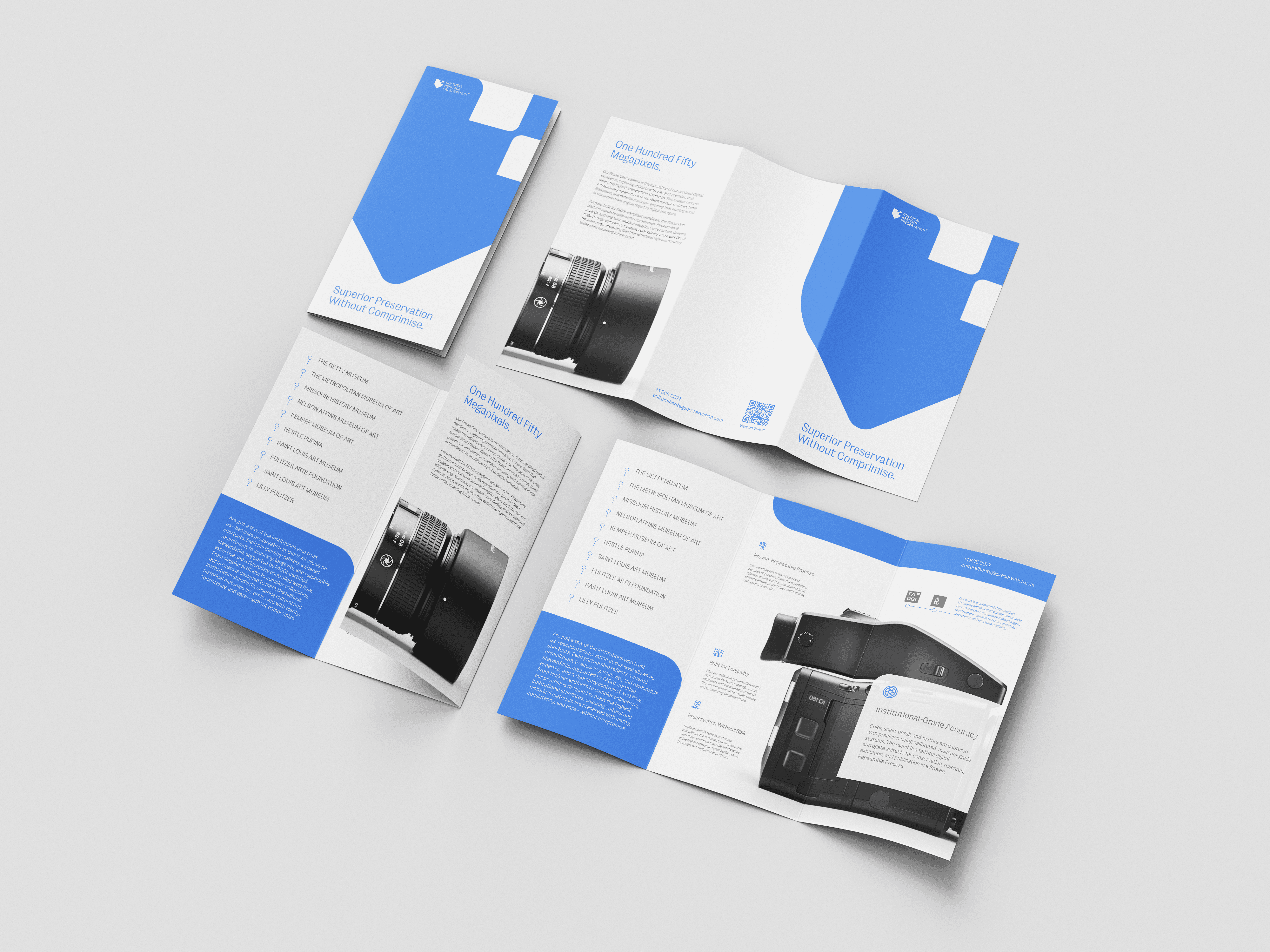
I approached the redesign as both a brand positioning and user experience challenge. The goal was to create a visual identity and website that reflected CHP's technical expertise while making its services easier to understand and navigate.
The new visual direction emphasized precision, restraint, and clarity, drawing inspiration from the visual language of museums, archival institutions, and fine art publications. A refined typographic system, carefully selected imagery, and generous negative space established a more sophisticated identity without distracting from the artwork and historical materials themselves.
I focused on organizing the website around the needs of prospective institutional clients. Rather than overwhelming visitors with technical specifications, the content was structured to introduce CHP's services, explain their practical value, and provide clear pathways to more detailed information. Technical capabilities and preservation standards were presented in the context of what they made possible, helping visitors understand the quality, accuracy, and care behind the work.
The result gave CHP a more cohesive and credible public presence. By aligning the company's digital experience with the quality of its services, the redesign established a stronger foundation for building relationships with larger institutions and communicating its position within the digital preservation space.